Tbilisi Budget Travel Guide: 6 Days for Remote Workers

Tbilisi caught us completely off guard with its wild mix of crumbling balconies, crazy fast internet, and meals that cost less than a fancy coffee back home. You can rent a sunny desk in a hip cafe for hours, order hot cheese bread, and spend under $35 a day without even trying. It might be the friendliest, most affordable city in Europe right now for anyone working from a laptop.
If you want great wine, sulfur baths, and a booming cafe culture that welcomes remote workers, Georgia is the spot. You can stay for up to a full year without a visa if you hold a passport from the US, the EU, or dozens of other countries. In this guide, we break down our exact six-day plan, neighborhood picks, realistic costs, and daily remote work spots.
Where to Stay and Work in Tbilisi
Tbilisi spreads out along the Mtkvari River, tucked between steep hills. Picking the right base makes all the difference because walking uphill on cobblestones in the heat will wear you down fast. We tested three areas and fell in love with two of them.
Vera is leafy, quiet, and sits right above the busy center. Old wooden homes share the streets with modern specialty coffee shops. You will run into other travelers typing away on their laptops everywhere you go. Rooms here on Airbnb cost between $25 and $40 a night for a full apartment with solid Wi-Fi. It feels like a real neighborhood where the baker waves hello each morning.
Marjanishvili sits on the left bank of the river. It has a grand 19th-century look, with wide avenues and great metro access. The real draw here is Fabrika, an old Soviet sewing factory turned into a massive community courtyard. You can sleep in a private room at the hostel, or rent a flat nearby for about $22 a night. The courtyard fills up with freelancers typing on laptops during the day and drinking local craft beer at night.
Sololaki is the old heart of the city, right behind Freedom Square. The buildings here have carved doors, hidden gardens, and peeling paint that looks straight out of an oil painting. It is louder and more touristy than Vera, but you can walk to every historic site in five minutes. If you want quiet sleep for work calls, ask your host if the windows face a quiet courtyard instead of the street.
When it comes to desk space, Tbilisi shines. Terminal has several outposts across town, and a day pass costs about $11. Impact Hub inside Fabrika costs around $12 for a day and has blazing internet speeds of 100 Mbps or higher. If you prefer cafes, check out Coffee LAB in Saburtalo, or Moulin Electrique tucked away in an alley near Sololaki. They welcome laptop users, have plenty of plugs, and serve flat whites for $2.50.
The Perfect 6-Day Tbilisi Itinerary
This plan balances steady work hours with exploring the city at an easy pace. We set aside morning blocks for deep work, afternoons for wandering, and evenings for massive Georgian dinners.
Day 1: Old Town Wandering and Sulfur Baths
Kick off your morning with strong coffee and eggs at Cafe Linville. Knock out three hours of emails while looking out through vintage lace curtains. Around noon, walk down through the maze of the Abanotubani district. You will smell the natural sulfur baths before you see the brick domes poking out of the ground.
Book a private room at Gulo's Thermal Spa for about $30 an hour. Add the traditional washing scrub for an extra $8. A bath attendant scrubs you down with a rough wool mitt and covers you in a mountain of soap foam. You leave feeling like a brand-new human. Finish your night eating five piping-hot khinkali meat dumplings at Cafe Daphna for under $5 total.
Day 2: Cable Cars and Narikala Fortress
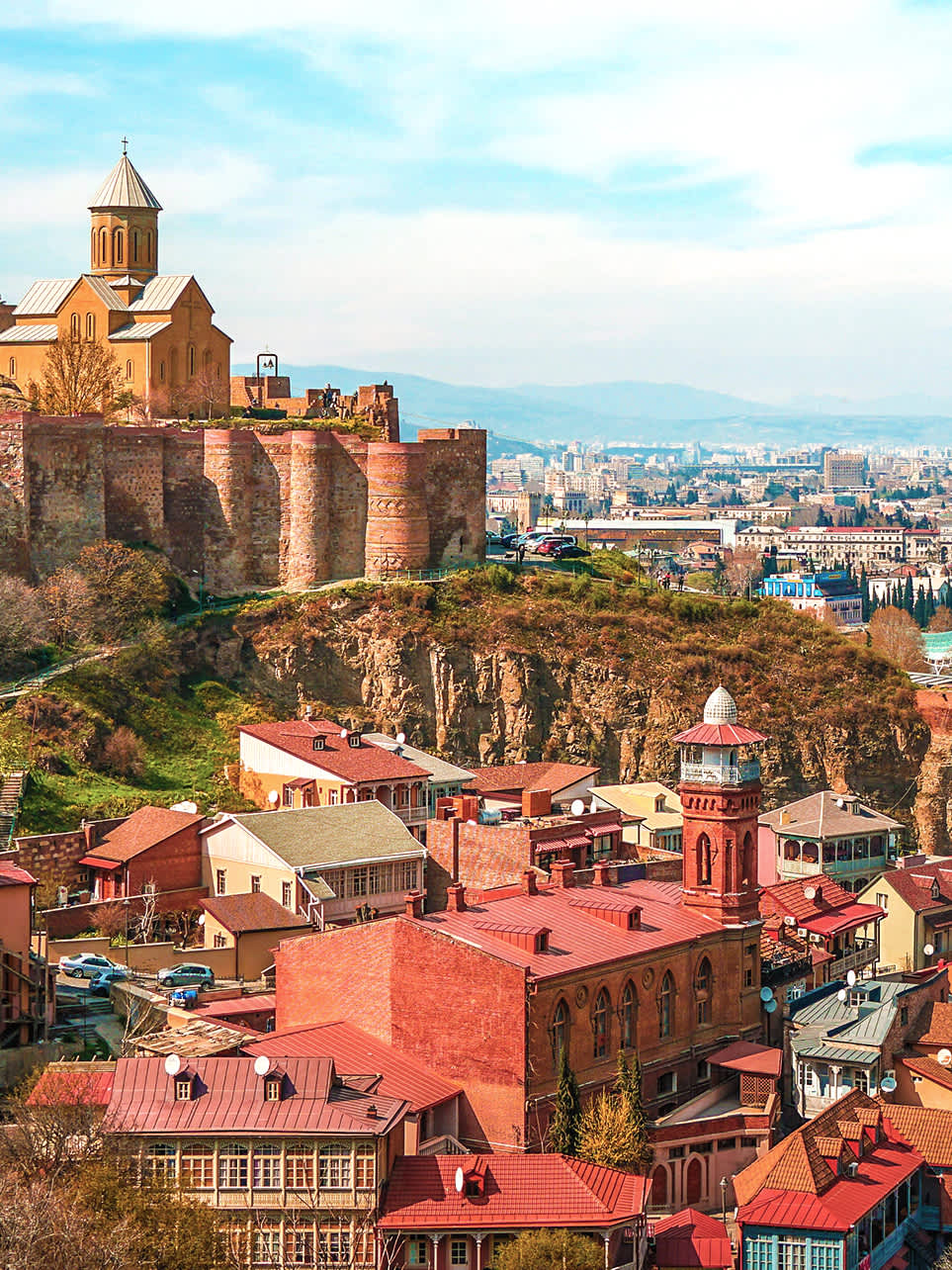
Set up your laptop at Stamba Cafe inside an old printing house in Vera. The natural light through the glass ceiling is unreal. After a productive morning block, catch the ropeway cable car from Rike Park up to Narikala Fortress for less than $1. The views of the whole valley will stop you in your tracks.
Walk past the giant aluminum statue of Mother of Georgia, then wind down the dirt paths behind the fortress into the National Botanical Garden. It costs about $1.50 to enter and gives you cool shade, mountain streams, and quiet benches. Head down to Asatiani Street for dinner and try lobio, a thick kidney bean stew served in a clay pot with cornbread and spicy pickled peppers.
Day 3: Fabrika and the Left Bank Markets
Cross over to the Chugureti district and spend your morning typing in the sun-drenched lobby of Fabrika. The Wi-Fi never drops, and the iced Americanos keep you sharp. When your work day wraps at 2 PM, take a short stroll to the Dry Bridge Flea Market.
Local vendors spread antique Soviet cameras, handmade jewelry, wool hats, and strange oil paintings across carpets on the grass. You can bargain politely for a brass trinket or just chat with the sellers. For cheap eats in Europe, this region rivals our picks in our Budapest Budget Travel Guide: 5 Days for Remote Workers. Walk over to Shavi Lomi for dinner, order their walnut paste snack platter, and sit in their magical hidden garden.
Day 4: Mtatsminda Funicular and Secret Bakeries
Grab a quick breakfast of fresh bread from a basement tone bakery. These tiny spots bake bread against the round clay walls of a sunken oven. A huge, steaming loaf of shoti bread costs about 45 cents and feeds two people easily. Spend your work block at Coffee LAB, knocking out your biggest tasks for the week.
At 3 PM, ride the steep funicular railway up to Mtatsminda Park. The ride costs about $3.50, and you will find an old-school amusement park right at the highest peak over town. Grab a seat on the terrace at Restaurant Funicular and order their famous cream-filled pastry, the ponchiki, for $1.50. Watch the city lights turn on across the valley before riding the train back down.
Day 5: Day Trip to the Kakheti Wine Valley
Take a day off from the desk or work on the road. Georgia claims to be the birthplace of wine, with an 8,000-year history of fermenting grapes in giant underground clay jars called qvevri. You can book a shared day tour to Sighnaghi, the city of love, for around $25 per person through local operators on Kote Afkhazi Street.
Walk along the ancient fortress walls that overlook the Alazani Valley. Stop at small family wineries like Cradle of Wine for tastings. Amber wine made in clay jars tastes bold, dry, and unlike anything from a supermarket back home. You will head back to the city stuffed with home-cured cheeses and fresh bread by sunset.
Day 6: Art Museums and Farewell Feast
Wrap up your last client projects at Hurma Cafe near Rustaveli Avenue. They have fast Wi-Fi, big breakfast bowls, and quiet booth seating. After work, visit the Georgian Museum of Fine Arts to see striking local paintings and ancient gold treasures. The ticket costs roughly $5.
End your stay with a proper supra feast. Grab a table at Pasanauri with other travelers. Order Adjaruli khachapuri, a boat-shaped bread filled with melted salty cheese, butter, and a raw egg yolk you stir in with your fork at the table. Wash it down with a glass of house Saperavi red wine, and raise a toast to an easy, productive week.
What Does It Cost to Visit Tbilisi?
How much money do you actually need for a trip like this? We tracked every single Georgian lari we spent over six days so you can budget with total confidence. The local currency is the Georgian Lari, written as GEL. You can explore more frugal nomad destinations in our full budget travel guides for digital nomads.
- Private Airbnb studio in Vera: $30 to $40 per night
- Dorm bed at a top hostel like Fabrika: $14 to $18 per night
- Coworking day pass: $10 to $12 per day
- Local meal (dumplings or stew with bread): $4 to $7
- Sit-down dinner with wine at a nice cafe: $12 to $18
- Fresh loaf of hot shoti bread from a bakery: $0.45
- Flat white or cappuccino at a specialty cafe: $2.50 to $3.00
- Metro or bus ride: $0.38 (1 GEL)
- Bolt taxi across town: $2.50 to $4.00
- Private sulfur bath room: $25 to $35 per hour
- Sim card with unlimited data for 7 days: $6.00
A solo traveler staying in a private Airbnb and eating out twice daily will spend about $50 to $65 per day. If you stay in a hostel dorm and cook simple breakfasts, you can easily pull off this six-day trip for $30 a day. You get a rich European city experience for Southeast Asian prices.
Staying Safe and Getting Around the City
Tbilisi is one of the safest capital cities we have ever visited. Street crime is very rare, and you will see women walking alone through well-lit streets late at night without any trouble. People are warm, though older locals can look a bit stern until you say hello with a smile.
The biggest real danger is traffic. Drivers are fast, lanes are treated like suggestions, and cars rarely stop for pedestrians at zebra crossings. Use underground pedestrian tunnels to cross wide boulevards. If you must cross on the street, wait for a local to step out and stick close to their side.
Skip street taxis because they love overcharging tourists. Instead, download the Bolt app as soon as you land. A ride across town rarely costs more than $3, and you never have to haggle over prices. To use the metro and buses, buy a blue MetroMoney card at any station for 75 cents, load a few dollars on it, and tap your way through the turnstiles.
Street dogs live all over Tbilisi, but do not be afraid of them. The city runs an ear-tag program where dogs are vaccinated, neutered, and tracked. Most of them are lazy, gentle giants who love a quiet pat on the head or a spare bite of cheese bread.
Plan Your Trip
Tbilisi delivers the kind of freedom that makes remote work so addictive. You get fast internet, cheap mountain wine, rich history, and friendly faces without blowing through your savings account.
- Best time to go: May, June, September, and October give you clear skies and pleasant 75-degree days without the freezing winter drafts or July heatwaves.
- Cash rule: Keep 50 lari in small cash bills in your pocket for local bakeries, flea market treasures, and tip jars, even though cards work in most cafes.
- Water check: Tap water in Tbilisi is clean, tasty, and safe to drink straight from the sink, saving you money on plastic bottles.
- Key phrase to learn: Say "Gamarjoba" for hello and "Madloba" for thank you. Locals will light up with huge smiles when you try them.
Are you packing your laptop for the Caucasus this year?
CONTENT_END


Comments
Post a Comment